
Auterive
History of Auterive
30 km south of Toulouse, towards Andorra, Auterive has been occupied since antiquity: built by the Romans on the bank of the Ariège river which joins the Garonne a little further north, it is then called Alta-Riba (Haute-Rive). For a long time under the domination of the counts of Toulouse and Foix, the city housed in the Middle Ages a fortified castle, destroyed twice: during the conflicts between the two houses in the 13th century, then in the war between the King of France Jean le Bon to the Comte de Foix Gaston Phébus in the 14th century. On the road to Toulouse, in the heart of the strategic Ariège valley, Auterive has been marked on several occasions by the events of the Great History. Partly destroyed by the Albigensian crusade, it will also be devastated by the plague, territorial wars and brigandage. In the 16th century, she endured the wars of religion. After its bridge collapsed in 1599, the river had to be crossed by boat until the end of the Ancien Régime. In the 17th century the reconstruction of the city began. It continued in the 18th century with the opening of a royal factory and in the 19th century with the construction of a flour mill, a mill and a new bridge over the Ariège. The port of Auterive has long been essential for trade and the transport of goods to Toulouse. In 1861, the arrival of the railway to link Auterive to the pink city will destroy this historic port.
Auterive's must-sees
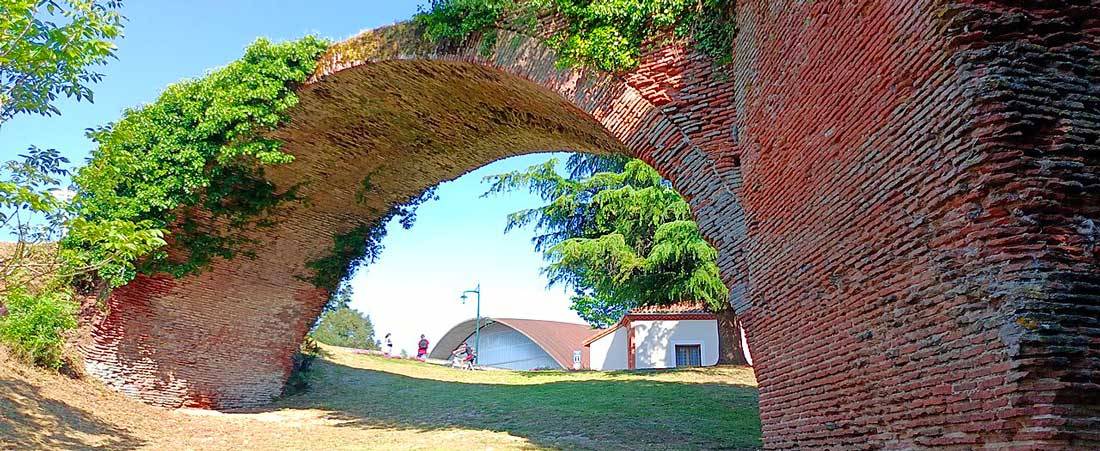
On the right bank of the Ariège, the Saint-Paul district is that of the old town. It houses the 12th century Saint-Paul church, recognizable by its bell tower, as well as several remarkable buildings: the Ysalguier house with its turret and its half-timbered facade, the Hôtel-Dieu-Saint-Jacques, the Maison Delpy, and the former royal manufactory. In the old quarter is also the Notre-Dame-du-Château chapel, built for protection purposes during the Crusades. You can also admire the remains of the old ramparts, surmounted by the Cambolas tower. On the left bank, the Faubourg de la Madeleine is home to the eponymous church as well as an old market hall that has become a performance hall. Auterive is home to many other religious buildings, built following the Christianization of the region: in addition to the chapel and the two churches of Saint-Paul and the Madeleine, stand on its territory the Saint-Pierre church in Picourel and the 'Sainte-Marie church in the cemetery. The long history of Auterive, witness to the tumultuous past of Toulouse and its region, makes it the privileged place to bear witness to daily life between Haute-Garonne and Ariège. One can thus visit the museum of trades and traditions, which houses a magnificent collection of tools and typical costumes of lost trades.
Living in Auterive
30 minutes by car from the southern districts of Toulouse, Auterive is a destination of choice for enjoying a good quality of life on a daily basis and all the advantages of the pink city. The city's SNCF station is served every 30 minutes by train from Toulouse-Matabiau. Spain and Andorra can be reached in 1.5 hours by road from Foix, as can the beaches of Narbonne, via the city of Carcassonne. Auterive is an urban municipality which itself offers many daily amenities: a media library and a game library, a cinema and an auditorium, about twenty restaurants including 8 pizzerias, bars, a nightclub. A wide range of sports equipment is available to residents of all ages, including a dojo, several stadiums, a swimming pool, indoor tennis courts and a choreographic center. Outdoor activities are king in this town which has the magnificent advantage of its unspoiled natural setting: walks, tree climbing, skate park, fishing course and play areas are thus available to auterivaines families.
For more information: https://www.auterive31.fr/
Photo credit : Kristof, CC BY-SA 4.0, via Wikimedia Commons

These properties may interest you